
What Is Data Sovereignty? The Complete Guide for Teams in 2026
What is data sovereignty? Learn how sovereign workspaces, self-hosted infrastructure, and data ownership are reshaping collaboration, compliance, and SaaS dependency in 2026.
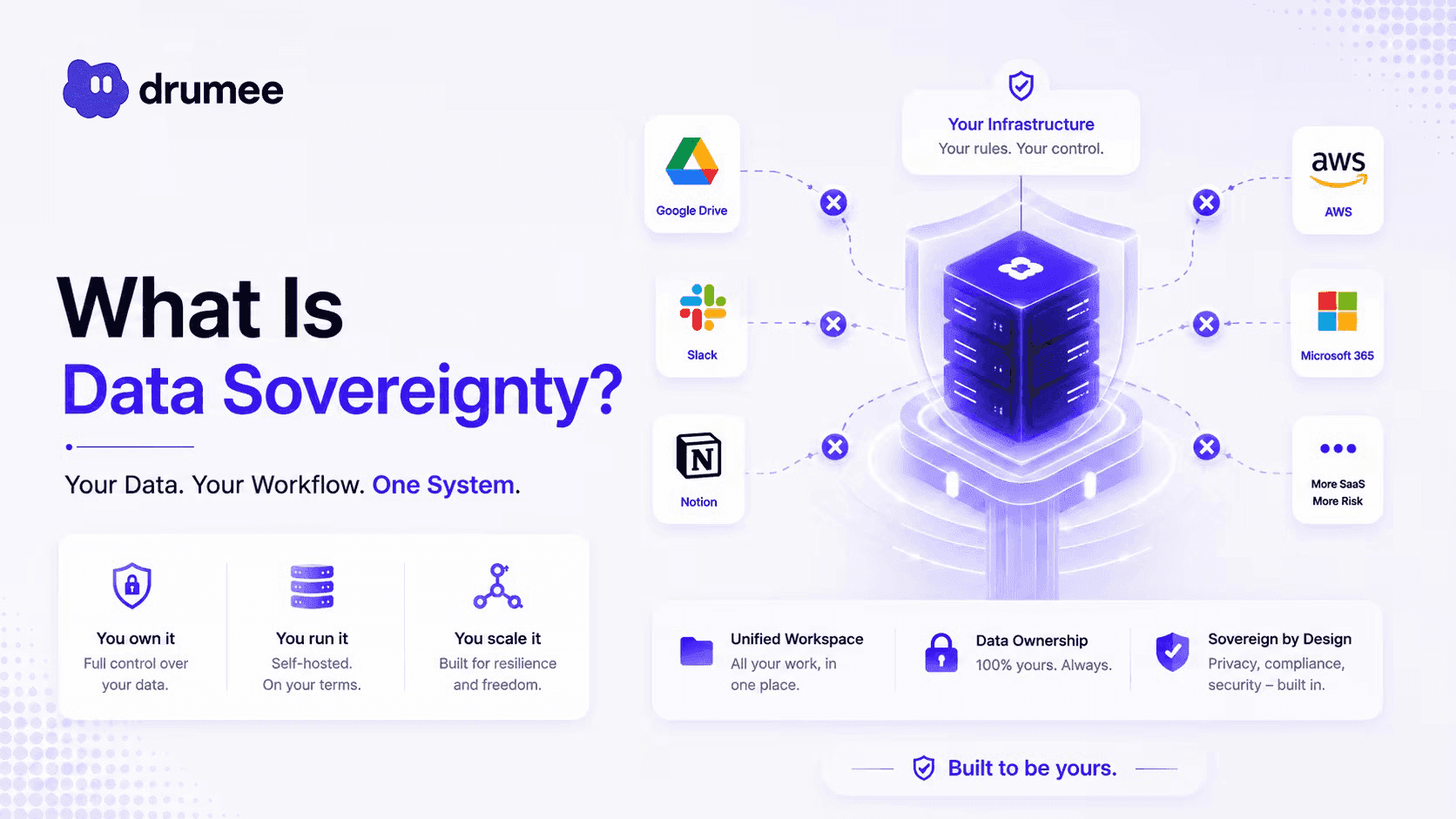
What is Data Sovereignty?
Data sovereignty is the ability for an organization to control where its data lives, who can access it, how it is processed, and which infrastructure governs it. Unlike traditional cloud SaaS tools where vendors host operational data inside centralized systems, sovereign infrastructure relies on self-hosted or privately controlled environments. Platforms like Drumee represent a new category of sovereign workspace where workflows, files, permissions, and collaboration operate on infrastructure owned by the organization itself.
The Rise of Data Sovereignty
For most companies, data sovereignty begins as a compliance discussion. Eventually, it becomes an operational discussion. Then, as teams scale and dependency compounds, it becomes a business continuity discussion.
At its core, data sovereignty means your organization retains authority over its operational data instead of outsourcing that authority entirely to third-party cloud vendors. The important nuance here is that sovereignty is not just about encrypting files or choosing a GDPR-compliant provider. It is about controlling the environment where your operational knowledge exists.
This includes:
- where data is physically stored
- who governs infrastructure access
- whether AI systems can process your content
- how permissions are enforced
- whether workflows remain portable
- whether vendors can suspend or restrict operational access
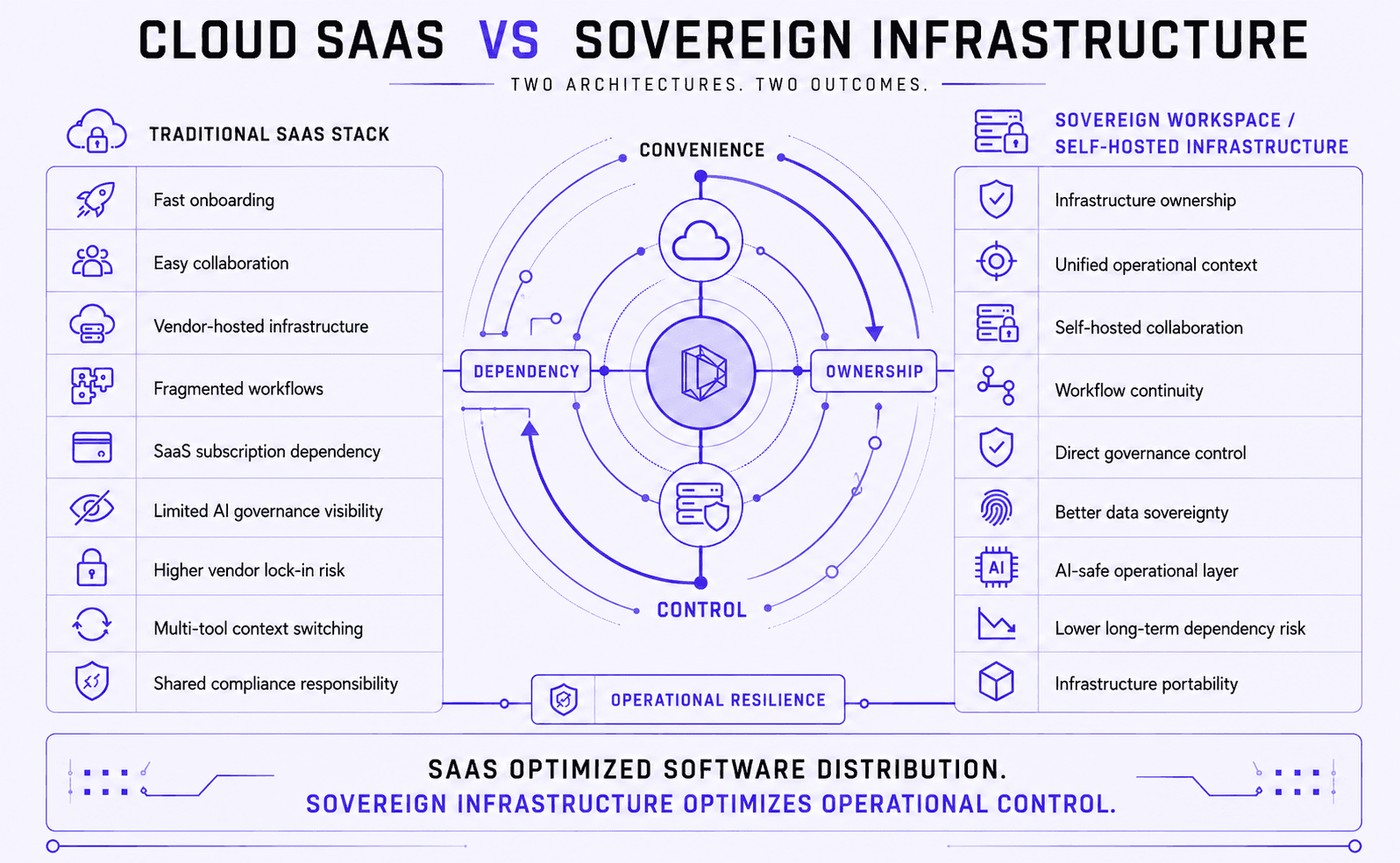
Most SaaS platforms optimize for convenience, not sovereignty. They reduce onboarding friction, simplify deployment, and accelerate collaboration, but they also centralize control around infrastructure the customer does not own.
That tradeoff felt reasonable during the early cloud era because SaaS genuinely transformed productivity. A startup in 2015 could deploy a full operational stack in a single afternoon using Google Workspace, Slack, Notion, Zoom, and AWS. The efficiency gains were enormous.
In 2026, however, the cost structure of that dependency is becoming harder to ignore.
According to IBM’s Cost of a Data Breach Report 2025, the global average cost of a data breach reached $4.88 million in 2024, the highest recorded figure to date. Meanwhile, enterprises increasingly report that third-party vendor exposure is now one of the largest attack surfaces in modern infrastructure. The problem is no longer only cybersecurity. It is operational dependency.
This is why concepts like sovereign workspace and sovereign data OS are rapidly gaining traction across infrastructure, DevOps, and privacy-focused communities.
Why Data Sovereignty Matters in 2026
The cloud era solved software distribution. It did not solve ownership.
For over a decade, companies accepted a simple exchange: convenience in exchange for control. Teams adopted SaaS because installation disappeared, onboarding accelerated, and remote collaboration became frictionless. What most organizations underestimated was how quickly operational knowledge would become fragmented across dozens of vendors.
A typical startup stack now includes Slack for communicatio, Google Drive for storage, Notion for documentation, Linear for task management, HubSpot for CRM, Zapier for automation, and AWS for infrastructure.
Individually, each product works well. Collectively, they create infrastructure fragmentation.
Drumee’s internal positioning documents describe this exact issue as the “context fragmentation problem,” where decisions, files, permissions, and workflows become distributed across systems that were never designed to preserve operational continuity.
This becomes dangerous because operational failure rarely happens inside one tool. It happens between tools.
According to Harvard Business Review research, employees in large enterprises switch between applications more than 1,200 times per day, losing nearly 9% of their annual work time to context switching and workflow fragmentation. In most organizations, the issue is not that individual tools fail technically. The issue is that operational context becomes scattered across disconnected systems like Slack, Google Drive, Notion, and project management platforms, creating invisible execution risk.
That distinction matters.
AI Changed the Risk Model
Before generative AI, most organizations treated SaaS tools as passive utilities. Today, operational data has become strategic input material.
Your documents, workflows, internal chats, onboarding systems, and customer conversations are no longer just stored information. They are potential AI training datasets, automation inputs, and behavioral intelligence layers.
This shift has fundamentally changed procurement conversations.
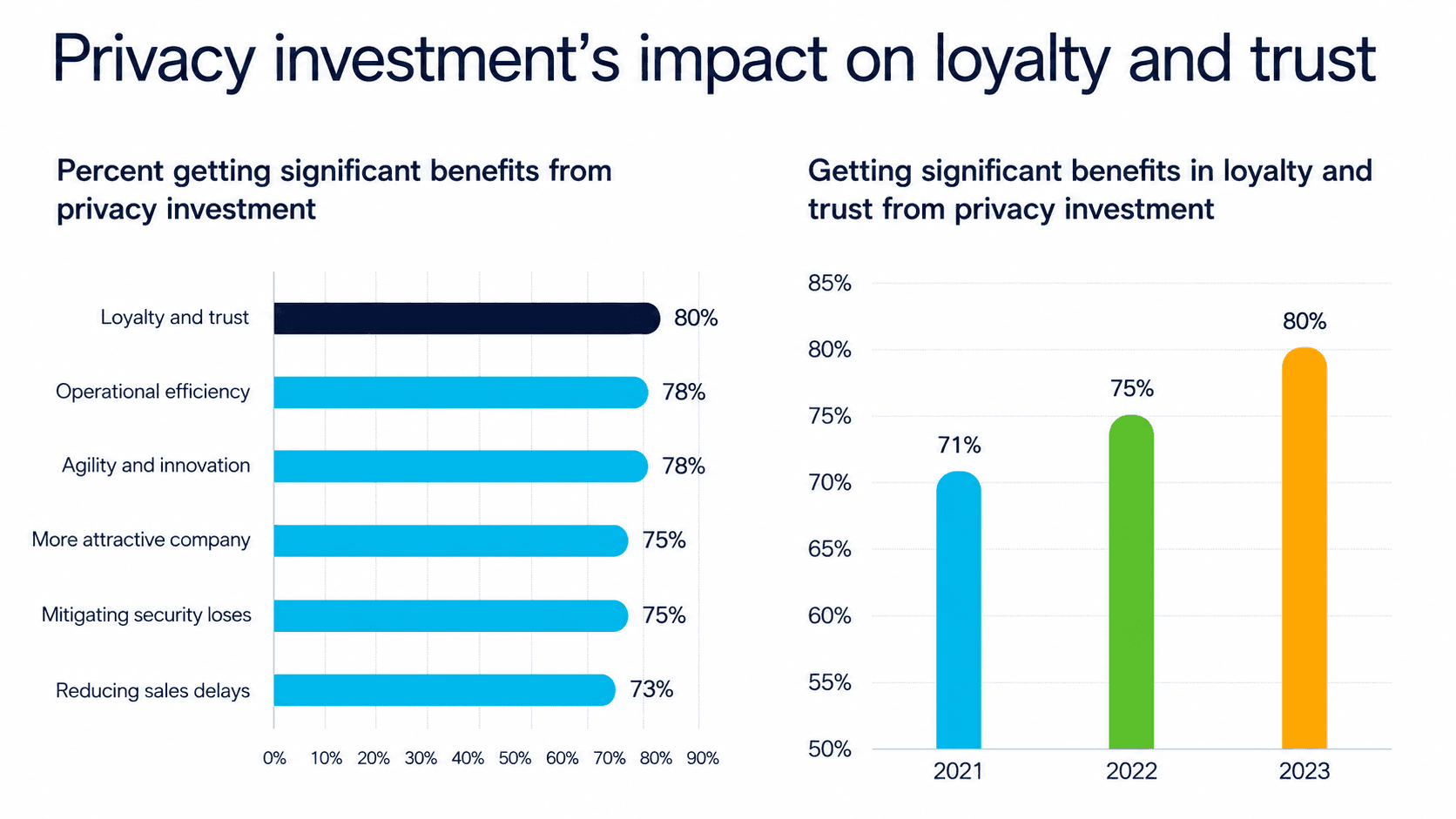
According to Cisco’s 2024 Data Privacy Benchmark Study, 94% of organizations say customers would not buy from them if data was not properly protected, while 48% of organizations have already limited generative AI usage because of privacy and governance concerns.
That means sovereignty is no longer purely ideological. It is increasingly commercial.
Cloud Concentration Became a Systemic Risk
Modern digital infrastructure depends heavily on a small number of centralized providers. AWS alone reportedly hosts close to one-third of the public cloud market, while Google and Microsoft dominate enormous portions of workplace collaboration infrastructure.
This creates what infrastructure operators increasingly call “concentration fragility.” If pricing changes, outages occur, APIs shift, or governance policies evolve, thousands of organizations absorb the downstream consequences simultaneously.
The CrowdStrike outage in 2024 demonstrated how centralized dependency can disrupt global operational continuity within hours, affecting airlines, healthcare systems, financial services, and enterprise workflows worldwide.
The issue was not simply technical downtime. It was systemic dependency.
The Hidden Cost of SaaS Dependency
The biggest cost of SaaS is rarely the subscription itself. The real cost is dependency compounding over time.
Most organizations initially experience SaaS as operational acceleration. Then eventually they realize they have unintentionally outsourced large portions of their workflow architecture.
Drumee’s GTM strategy materials frame this as “the SaaS tax economy,” where organizations continuously rent access to operational infrastructure they fundamentally rely on.
The hidden costs appear gradually in fragmented workflows, duplicated context, migration friction, API dependency, pricing escalation, and operational lock-in.
A company with 10 employees can usually migrate tools relatively easily. At 50 employees, migration becomes painful. At 200 employees, it becomes a strategic risk.
This is where SaaS vendor lock-in becomes dangerous because workflows stop belonging entirely to the organization. They begin depending on external architectural decisions made by vendors.
One of the most underestimated risks is workflow fragmentation itself. Research from Gartner suggests employees switch applications more than 1,200 times per day in digitally fragmented environments. The productivity cost is not only distraction. It is context reconstruction.
Teams increasingly spend time rebuilding operational continuity across disconnected systems instead of executing work directly.
Who Actually Owns Your Data?
Legally, most SaaS providers allow customers to retain ownership of uploaded content. Operationally, however, the vendor still controls the infrastructure layer where that content exists. That distinction is critical.
In most SaaS environments, vendors control hosting architecture, backend access, pricing models, API permissions, export tooling, account enforcement, and infrastructure governance. This is why “own your data” has evolved from a privacy slogan into an infrastructure principle.
Ownership without infrastructure control is incomplete ownership. This is also why GDPR compliance alone does not automatically create sovereignty. Many organizations assume that because a provider offers GDPR tooling, the sovereignty issue is solved. In reality, compliance and sovereignty address different layers of the problem.
A company may technically comply with GDPR while still remaining heavily dependent on vendor-controlled infrastructure.
Cloud vs Self-Hosted Infrastructure
The cloud versus self-hosted debate is often framed too simplistically. The real question is not which model is universally better. The real question is which model aligns with your operational risk profile.
SaaS remains highly effective for small teams, rapid experimentation, low compliance exposure, lightweight workflows, and speed-focused environments.
For an early-stage startup validating product-market fit, deploying self-hosted systems too early can become unnecessary operational overhead.
However, sovereignty becomes strategically important when sensitive client data is involved, AI governance matters, compliance pressure increases, operational continuity becomes critical, SaaS costs compound aggressively, and workflow fragmentation slows execution.
This transition point usually happens when infrastructure resilience becomes more valuable than onboarding convenience.
That is the exact positioning Drumee is building toward: a unified sovereign workspace where collaboration, files, workflows, and permissions operate inside infrastructure controlled by the organization itself rather than fragmented SaaS layers.
Data Sovereignty vs Data Privacy vs Data Residency
These concepts overlap constantly, but they are not interchangeable.
- Data privacy focuses on who can legally access information and how personal data is protected.
- Data residency focuses on where data is geographically stored.
- Data sovereignty focuses on who controls the infrastructure and operational environment governing that data.
A company can achieve strong privacy protections while still lacking sovereignty if the infrastructure itself remains vendor-controlled. This distinction matters especially for legal firms, healthcare organizations, fintech companies, government-adjacent systems, and agencies handling client-sensitive workflows
As AI systems increasingly integrate directly into collaboration software, sovereignty becomes less about storage location and more about operational authority.
How Sovereign Workspaces Work
A sovereign workspace combines collaboration, storage, permissions, communication, and workflows inside infrastructure controlled by the organization itself.
Traditional SaaS stacks aggregate disconnected tools. Sovereign systems unify operational context.
This architectural difference is subtle conceptually but significant operationally.
Drumee positions itself as a sovereign data OS because it treats workflows as contextual systems rather than isolated applications. Instead of scattering conversations in Slack, documents in Drive, permissions elsewhere, and workflows across APIs, sovereign workspace architecture attempts to preserve continuity inside one controlled environment.
This is especially important for modern remote teams because operational knowledge increasingly behaves like infrastructure itself.
The future infrastructure winners may not be the platforms with the most integrations. They may be the platforms that preserve execution continuity best.
When Teams Should Move to Self-Hosted
One of the biggest misconceptions about sovereignty is that every company should self-host immediately. That is not true.
Infrastructure maturity matters.
A startup with five employees likely benefits more from deployment speed than sovereignty optimization. A legal agency handling confidential client workflows likely prioritizes governance much earlier. A useful decision framework is:
- If workflow speed matters most, SaaS often works.
- If operational resilience matters most, sovereignty becomes increasingly valuable.
Organizations are typically ready for sovereign infrastructure when SaaS costs become unpredictable, workflow fragmentation creates execution risk, AI governance becomes important, migration risk feels operationally dangerous, procurement teams ask infrastructure questions, compliance requirements increase, and vendor dependency feels strategically uncomfortable.
The important insight is that sovereignty is rarely triggered by ideology alone. It is usually triggered by operational pain.
Common Myths About Data Sovereignty
One common misconception is that sovereignty means rejecting cloud infrastructure entirely. In reality, many sovereign systems still operate on cloud infrastructure through private deployments or controlled hosting environments. The difference is governance ownership.
Another misconception is that self-hosted infrastructure only works for enterprises. Modern Docker deployments, orchestration tooling, and lightweight infrastructure layers have dramatically reduced operational barriers. Platforms like Drumee specifically position self-hosted collaboration as accessible infrastructure rather than enterprise-only architecture.
The most interesting myth, however, is the assumption that sovereignty slows innovation.
Increasingly, the opposite may become true.
As SaaS stacks become more fragmented, teams spend more operational energy reconstructing context between systems than executing work directly. Sovereign systems reduce this fragmentation by preserving continuity across workflows.
In many environments, sovereignty is becoming an execution efficiency advantage.
The Future of Sovereign Infrastructure
The next decade of collaboration infrastructure will likely split into two categories.
The first category will optimize for convenience, centralized cloud management, and rapid onboarding. The second will optimize for operational resilience, ownership, governance, AI-safe workflows, and infrastructure portability.
The important shift is that sovereignty is no longer only a privacy conversation. It is becoming an economic one.
As AI governance pressure grows and SaaS pricing compounds, organizations increasingly realize that operational infrastructure behaves less like disposable software and more like strategic capital. This is why the sovereign data OS category matters.It reframes collaboration infrastructure from applications teams rent into systems organizations control.
Final Thoughts
The most important thing to understand about data sovereignty is that it is not fundamentally a storage problem. It is a control problem.
For years, organizations accepted the tradeoff of convenience over ownership because the operational gains were undeniable. Today, however, AI processing, workflow fragmentation, compliance pressure, and cloud dependency are changing that equation.
The companies adapting fastest are not necessarily abandoning SaaS entirely. They are becoming more intentional about: where operational context lives, who controls infrastructure, how workflows remain portable, and how institutional knowledge stays protected
This is the shift sovereign workspace platforms like Drumee are designed for: not as another productivity tool, but as infrastructure for organizations that no longer want operational continuity dependent on systems they do not control.
FAQ
1/ What is data sovereignty?
Data sovereignty is the ability for an organization to control where its data lives, who can access it, how it is processed, and which infrastructure governs it. Sovereignty focuses on operational control rather than simply data storage or compliance.
2/ Is Google Drive GDPR compliant?
Google Drive provides GDPR tooling and contractual agreements, but organizations still rely on Google-controlled infrastructure and shared compliance responsibility. Compliance does not automatically equal sovereignty.
3/ Who owns my data in SaaS platforms?
Organizations usually retain legal ownership of uploaded content, but SaaS vendors still control the infrastructure, operational environment, backend systems, and governance layers where that data exists.
4/ What is a sovereign workspace?
A sovereign workspace is a collaboration environment where workflows, files, permissions, and communication operate on infrastructure controlled directly by the organization instead of third-party SaaS vendors.
5/ Why are companies moving away from SaaS dependency?
Organizations increasingly worry about SaaS vendor lock-in, workflow fragmentation, AI governance, rising subscription costs, operational continuity risks, and dependence on centralized infrastructure providers.
6/ What is the difference between privacy and sovereignty?
Privacy focuses on protecting information access and personal data usage. Sovereignty focuses on controlling the infrastructure and operational systems governing that information.
--------------
About Drumee
Drumee is the world’s first unified sovereign data infrastructure: a self-hosted, OS-like workspace that turns your own filesystem into a private collaborative environment.
Fully under your control, Drumee combines files, chat, tasks, and workflows with enterprise-grade permissions built directly into the infrastructure layer. No cloud vendors. No fragmented SaaS stack. No operational dependency.
Instead of renting your workspace from external providers, Drumee allows organizations to own the environment where operational knowledge lives.
Your Data. Your Workflow. One system. Built to be yours!
Follow us at: X | LinkedIn | Drumee Founder X | Drumee Founder LinkedIn
Keep reading
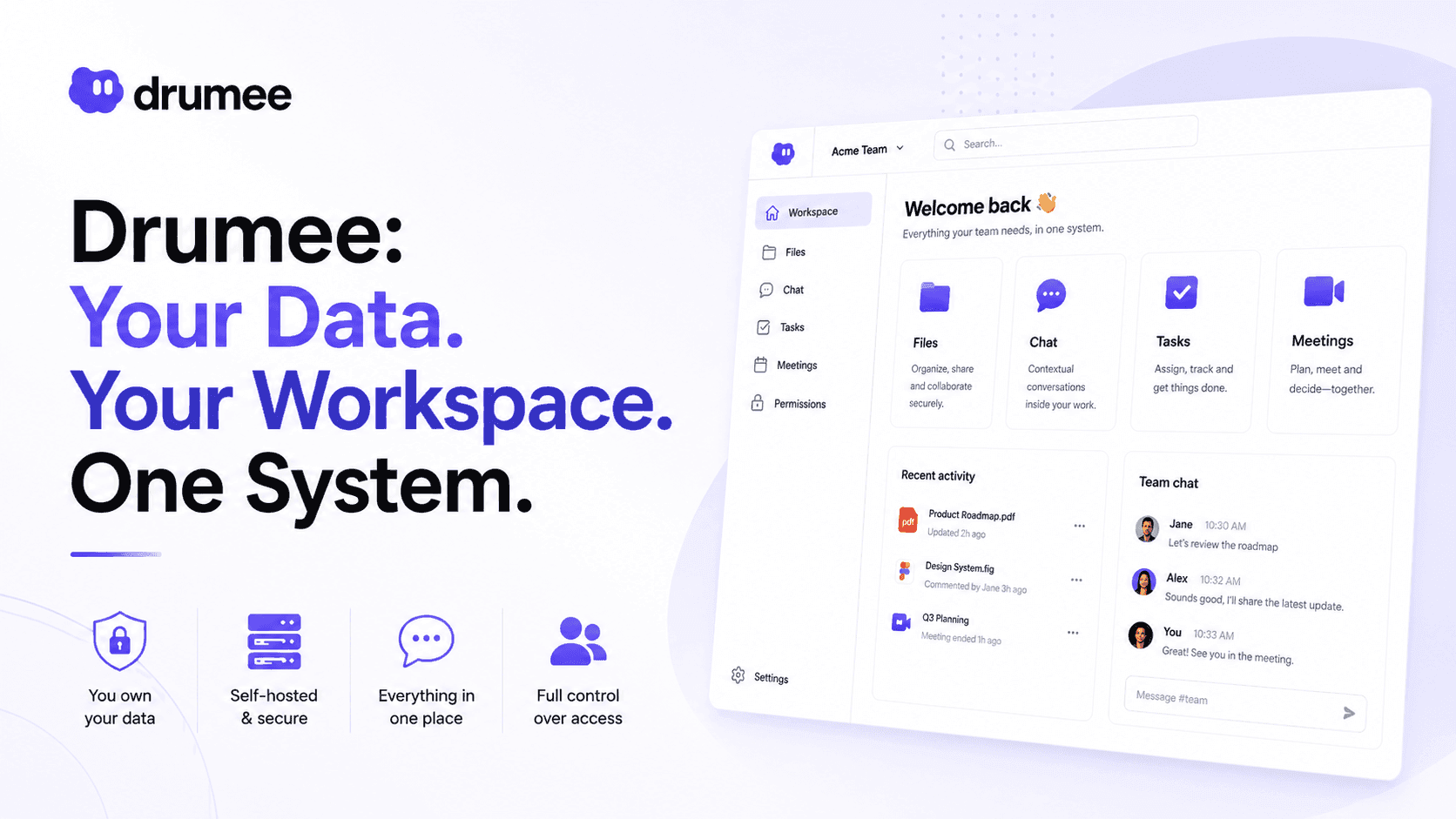
Drumee: Your Data. Your Workspace. One System
Drumee is a self-hosted, sovereign data workspace where files, chat, tasks, and permissions live in one place on infrastructure you own. Learn what Drumee is, what it stands for, and how to get started.
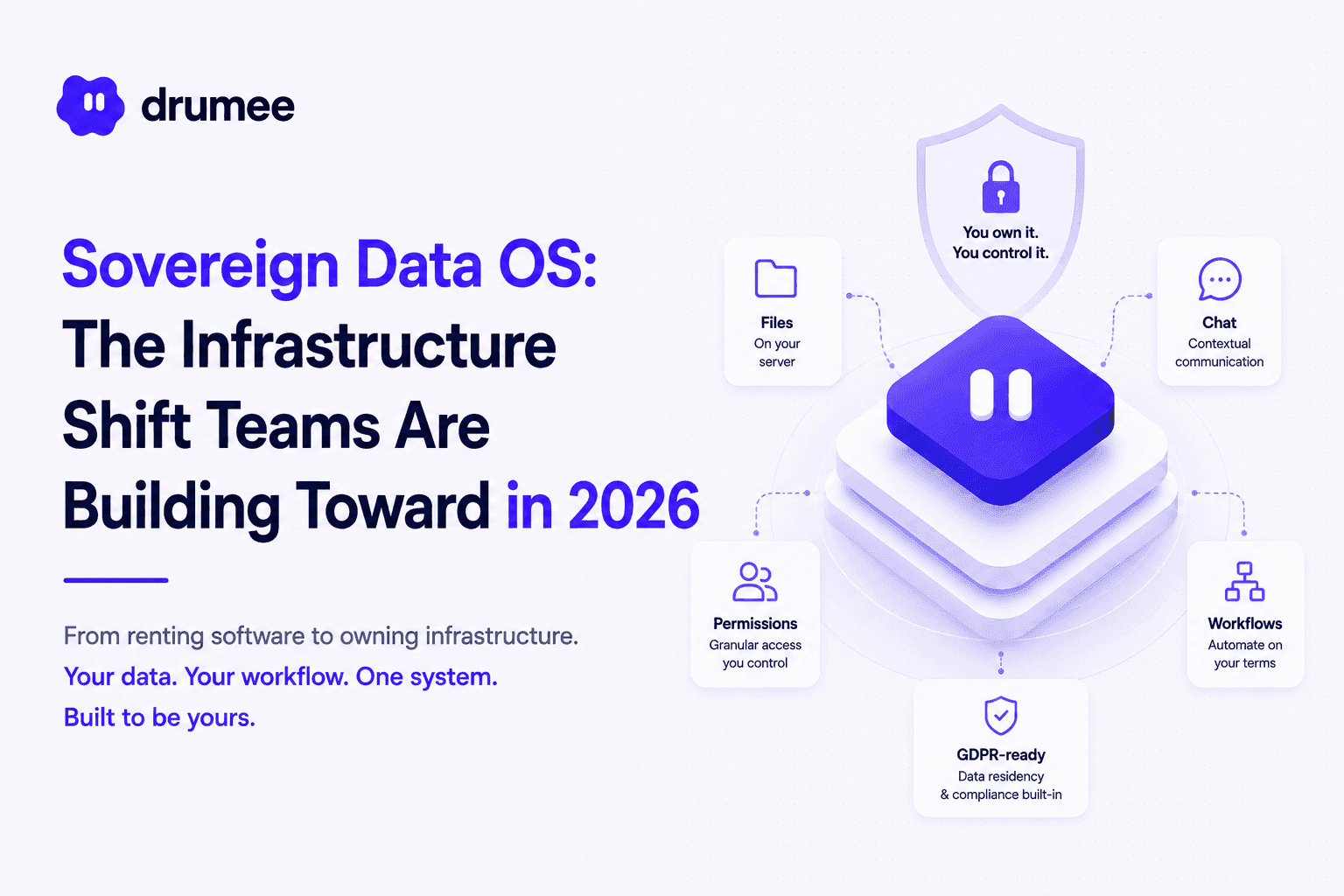
What Is a Sovereign Data OS? The Infrastructure Shift Teams Are Building Toward in 2026
What is a sovereign data OS? Learn how Drumee's unified self-hosted infrastructure replaces fragmented SaaS stacks with a single governable environment for files, chat, permissions, and workflows in 2026.
Data Ownership: What It Means and How to Achieve It in 2026
What is data ownership and how do you actually achieve it? Learn the three layers of data control, why AI changes the stakes, and how self-hosted infrastructure gives teams genuine ownership in 2026.