
Private Cloud for Small Teams: Own Your Data Without Enterprise Budget
Private cloud for small teams in 2026 costs $1.50 per user per month on a VPS, vs $14 to $22 per user on commercial cloud. Here is the practical case for owning your infrastructure without an enterprise IT budget.
Private Cloud for Small Teams: Own Your Data Without Enterprise Budget
A private cloud for small teams is a computing environment where your organization's files, communication, and operational workflows run on infrastructure dedicated exclusively to your team, administered under your own governance, with no shared tenancy with other organizations and no third-party vendor holding administrative authority over your data. Until recently, the infrastructure economics of private cloud made this a realistic option only for enterprises with dedicated IT teams and significant capital budgets. In 2026, that constraint has been substantially removed. According to Northflank's 2026 private cloud platform analysis, private cloud has moved beyond being a tool for large enterprises and is now the pragmatic choice for teams that need to balance compliance, security, and cost control with the flexibility of cloud infrastructure. The platforms and tooling available in 2026 make private cloud deployment accessible to any team with a single technically capable member, at a cost structure that competes directly with mid-tier SaaS subscriptions rather than enterprise IT procurement budgets.
Why Have the Economics Changed for Small Teams?
The assumption that private cloud infrastructure is financially out of reach for small teams persists in 2026 despite the evidence contradicting it, and understanding where that assumption breaks down is the first step toward making an informed infrastructure decision.
The SaaS pricing trajectory that most small teams are currently experiencing provides the necessary context. According to CheckThat.ai's 2026 Google pricing analysis, Google raised all Workspace tiers by 16.7 to 22.2% in January 2025 while bundling Gemini AI. Business Standard moved from $12 to $14 per user per month on the annual plan. The price increases were mandatory with no option to keep current features at the old price, and egress fees for moving data out of Google Cloud Platform run $0.12 per GB for most destinations. That last figure represents the financial cost of switching, not just the operational cost, which is a specific vendor lock-in mechanism that the private cloud alternative eliminates.
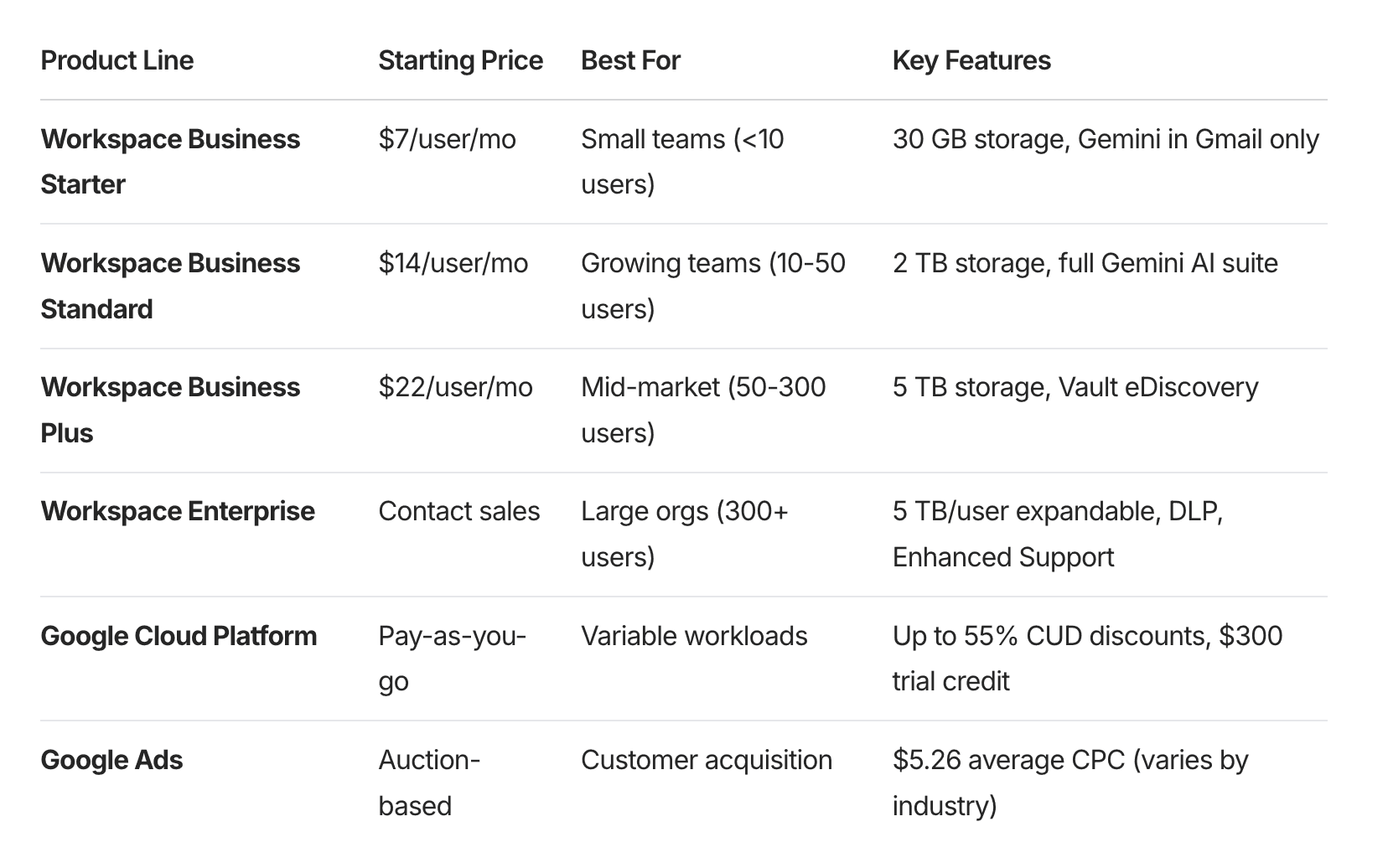
The comparison between SaaS subscription costs and private cloud infrastructure costs has become concrete enough to cite precisely. MassiveGRID's 2026 three-year total cost of ownership analysis of Nextcloud versus cloud storage provides a specific cost comparison: self-hosted Nextcloud on a VPS produces savings nearly twice the server cost when compared to equivalent cloud storage subscriptions over a three-year period. A standard VPS configuration adequate for small team collaboration infrastructure is available from European providers including OVHcloud, Hetzner, and Contabo at between $5 and $20 per month in infrastructure cost. The per-seat equivalent of running a private cloud collaboration environment for a 10-person team on a $15 per month VPS is $1.50 per user per month, a fraction of any comparable commercial cloud offering.
The cost differential is not only in the subscription line. According to SecureBlitz's 2026 analysis of managed cloud services for SMEs, a 2025 Lemon.io report found that only 44% of UK small businesses use cloud-based infrastructure or hosting services, with security concerns, regulatory hurdles, and limited technical support as the primary barriers. The businesses that have not yet made the transition to cloud at all are disproportionately the ones with the highest regulatory exposure, where public SaaS cloud creates GDPR or sector-specific compliance liability that private cloud resolves at the architecture level rather than through contractual coverage. For these teams, private cloud is not a more expensive version of what they are already doing. It is the cost of compliance that they are deferring through inaction.
What Does Private Cloud Mean for Small Team Operations?
The term private cloud covers a range of deployment models, and for small teams the distinction between these models is the most practically important question to understand before evaluating any specific platform.
The first model is self-hosted private cloud, where the team deploys and administers its own infrastructure on a VPS or bare-metal server. This model provides the maximum governance authority and the lowest recurring cost, but requires a team member capable of managing Docker deployments, system updates, and backup configurations. For teams with this capability, the operational overhead is minimal and the governance benefit is complete.
The second model is managed private cloud, where a provider manages the underlying infrastructure while the team administers the application layer. Nextcloud One, launched as a fully managed service hosted in Germany, is the most directly relevant example for small teams that need GDPR-compliant private collaboration infrastructure without managing servers directly. Nextcloud One enables small organizations to establish a secure and compliant cloud-based collaboration platform, overcoming resource and infrastructure limitations while maintaining the data governance properties of self-hosted infrastructure, because the data resides in Germany under EU jurisdiction with Nextcloud GmbH as the infrastructure operator rather than a US hyperscaler.
The third model is the hosted private cloud, where a provider like OVHcloud or OpenMetal delivers dedicated infrastructure to a specific organization's specifications without shared tenancy. OpenMetal's private cloud infrastructure, built on OpenStack and Ceph, provides dedicated hardware with full root access and fixed-cost pricing that eliminates the consumption-based billing variability that makes public cloud costs unpredictable at scale. For small teams whose workloads have grown to the point where VPS resource constraints create performance issues, the hosted private cloud option bridges the gap between self-hosted affordability and enterprise private cloud capability.
Each of these models addresses the core governance problem of public SaaS cloud: the team's data exists in an environment where administrative authority, AI processing governance, and pricing decisions are controlled by an external vendor under terms the team accepted at signup and cannot modify without switching platforms entirely.
The Compliance Case That Makes Private Cloud Urgent for Small Teams
Research and Markets' April 2026 private cloud market analysis identifies the primary market driver with precision: private cloud solutions offer organizations greater control over their data, which is crucial for complying with strict regulatory requirements such as GDPR, HIPAA, and others that dictate how data should be handled. Organizations in healthcare, finance, and government are specifically identified as the segments where compliance pressure is most acute. But the regulatory expansion documented throughout 2025 and 2026 means these industries are not exceptions. They are the early indicators of a compliance environment that is expanding to cover most professional services organizations processing any personal data.
Broadcom's 2026 private cloud predictions analysis frames the macro context: as CIOs and CISOs enter 2026 under mounting pressure to reduce costs, justify AI investments, and streamline operations, private cloud is emerging as a practical solution. With cloud spend under scrutiny and geopolitical risks rising, organizations are turning to private cloud to balance cost efficiency, sovereignty, and the evolving demands of the modern application stack. The geopolitical risk dimension is particularly relevant for small teams operating in regulated sectors: the US CLOUD Act, which requires American technology companies to produce stored data under valid US government orders regardless of storage location, creates a compliance exposure for any EU or UK organization using US-headquartered cloud providers that no data processing agreement resolves.
For small teams in legal services, healthcare-adjacent technology, financial services, or any organization handling personal data for European clients, the private cloud alternative eliminates this exposure at the architecture level rather than through contractual indemnification clauses that regulators are increasingly treating as insufficient. The February 2026 EDPB enforcement report on the right to erasure, which found that half of audited controllers had no specific procedures for erasure in backup systems, describes a compliance failure that is structurally preventable when the team administers its own backup infrastructure directly.
The AI Processing Dimension That Has Changed the Private Cloud Calculus
The most significant development that has changed the private cloud calculus for small teams in 2026 is not the pricing trajectory of SaaS subscriptions. It is the AI processing layer that has been embedded in every major productivity platform, which has converted the question of cloud infrastructure governance from a compliance concern into an operational one.
When Google Workspace, Microsoft 365, Notion, and Slack each embed AI features that process the content stored in their platforms, small teams using those platforms are implicitly consenting to having their operational data, client communications, internal strategy documents, and confidential workflows, processed by AI systems operating on vendor infrastructure under vendor governance terms. This processing occurs as a feature of the product, not as a separately-contracted service the team can evaluate independently. For small teams whose clients have not consented to their data being processed by third-party AI systems, and whose contracts may include confidentiality obligations that extend to how data is processed rather than just where it is stored, the AI processing layer of public SaaS cloud creates a liability exposure that did not exist before 2024.
Private cloud for small teams resolves this at the architecture level. When a team's files, communications, and workflows run on infrastructure the team administers, AI processing occurs only through systems the team has explicitly deployed and configured within its own infrastructure boundary. The team controls which AI models access which data, how outputs are retained, and what governance framework applies to AI processing. This is not a configuration option that public SaaS cloud providers make available through settings. It is a structural property of infrastructure the team owns.
What Small Teams Need to Run Their Own Private Cloud
The operational reality of running a private cloud for a small team in 2026 is meaningfully less demanding than most teams expect before investigating it. The minimum viable private cloud for a small team, covering file storage and sharing, with GDPR-compliant data residency and full administrative control, requires a VPS from a European provider, a Docker deployment of a self-hosted platform like Nextcloud, and basic configuration of encryption, backup, and access control settings.
For teams that want a unified private cloud environment covering not just file storage but also communication, task management, and permissions within a single governed infrastructure layer, Drumee's sovereign data OS architecture provides this as a single deployment. Files, conversations, tasks, and permissions exist inside a single self-hosted environment where the governance boundary is coherent across all operational layers, the audit trail is organizationally controlled, and the AI processing layer consists only of systems the team has explicitly integrated. There is no vendor holding administrative authority over any layer of the environment. The infrastructure belongs to the team from the first day of deployment, and the cost structure scales with infrastructure choices rather than with headcount or vendor pricing decisions.
For small teams that have been deferring the private cloud question because they assumed it was financially or technically out of reach, 2026 is the year where both assumptions require updating. The infrastructure tooling has matured. The cost structures have compressed. And the governance cost of remaining on a public SaaS cloud, as AI processing deepens and regulatory scrutiny of vendor-controlled infrastructure intensifies, has become measurable enough to make the calculation straightforward.
FAQ
1/ What is a private cloud for small teams?
A private cloud for small teams is a computing environment where files, communication, and workflows run on infrastructure dedicated exclusively to the team, administered under the team's own governance, with no shared tenancy and no third-party vendor holding administrative authority over data. Options range from self-hosted VPS deployments to managed private cloud services hosted in compliant jurisdictions.
2/ Is private cloud affordable for small teams in 2026?
Yes. A VPS from a European provider adequate for a small team's private cloud infrastructure costs between $5 and $20 per month. Per-user, this is $1.50 per user per month for a 10-person team, compared to $14 to $22 per user per month for equivalent commercial cloud offerings. MassiveGRID's 2026 TCO analysis found self-hosted Nextcloud produces savings nearly twice the server cost versus cloud storage subscriptions over three years.
3/ What is the GDPR compliance advantage of a private cloud for small teams?
Private cloud gives the team direct administrative authority over data residency, backup erasure, access logs, and AI processing, allowing compliance evidence to be produced independently rather than through vendor cooperation. It also eliminates US CLOUD Act exposure, which applies to any US-headquartered cloud provider regardless of where data is physically stored.
4/ What technical capability does a small team need to run a private cloud?
For self-hosted deployments, one team member capable of managing Docker deployments, system updates, and backup configurations is sufficient. For managed private cloud options like Nextcloud One, no server administration is required while the data governance properties of private infrastructure are preserved. The operational overhead is primarily in configuration rather than ongoing maintenance.
5/ How does Drumee fit into a private cloud strategy for small teams?
Drumee is a sovereign data OS that provides a unified private cloud environment covering files, communication, tasks, and permissions in a single self-hosted deployment. It eliminates the fragmentation of managing separate self-hosted tools for each function, provides a coherent audit trail and permission model across all operational layers, and requires no third-party vendor to hold administrative authority over any layer of the environment.
Related article: How to Quit Google Workspace Without Losing Your Data?
------------------------------
About Drumee
Drumee is the world’s first unified sovereign data infrastructure: a self-hosted, OS-like workspace that turns your own filesystem into a private collaborative environment.
Fully under your control, Drumee combines files, chat, tasks, and workflows with enterprise-grade permissions built directly into the infrastructure layer. No cloud vendors. No fragmented SaaS stack. No operational dependency.
Instead of renting your workspace from external providers, Drumee allows organizations to own the environment where operational knowledge lives.
Your Data. Your Workflow. One system. Built to be yours!
Follow us at: Website | X | LinkedIn | Drumee Founder X | Drumee Founder LinkedIn
Keep reading
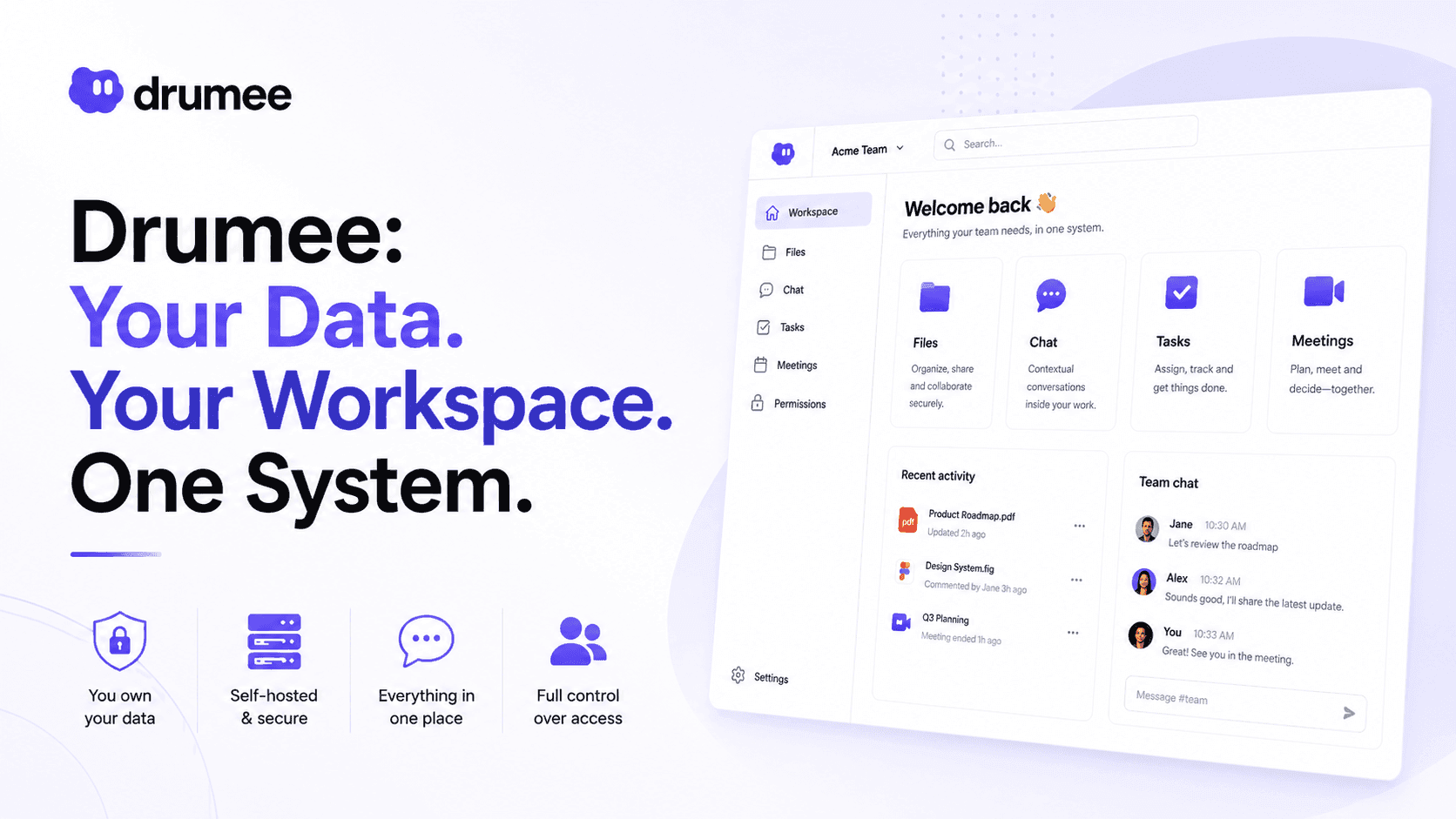
Drumee: Your Data. Your Workspace. One System
Drumee is a self-hosted, sovereign data workspace where files, chat, tasks, and permissions live in one place on infrastructure you own. Learn what Drumee is, what it stands for, and how to get started.
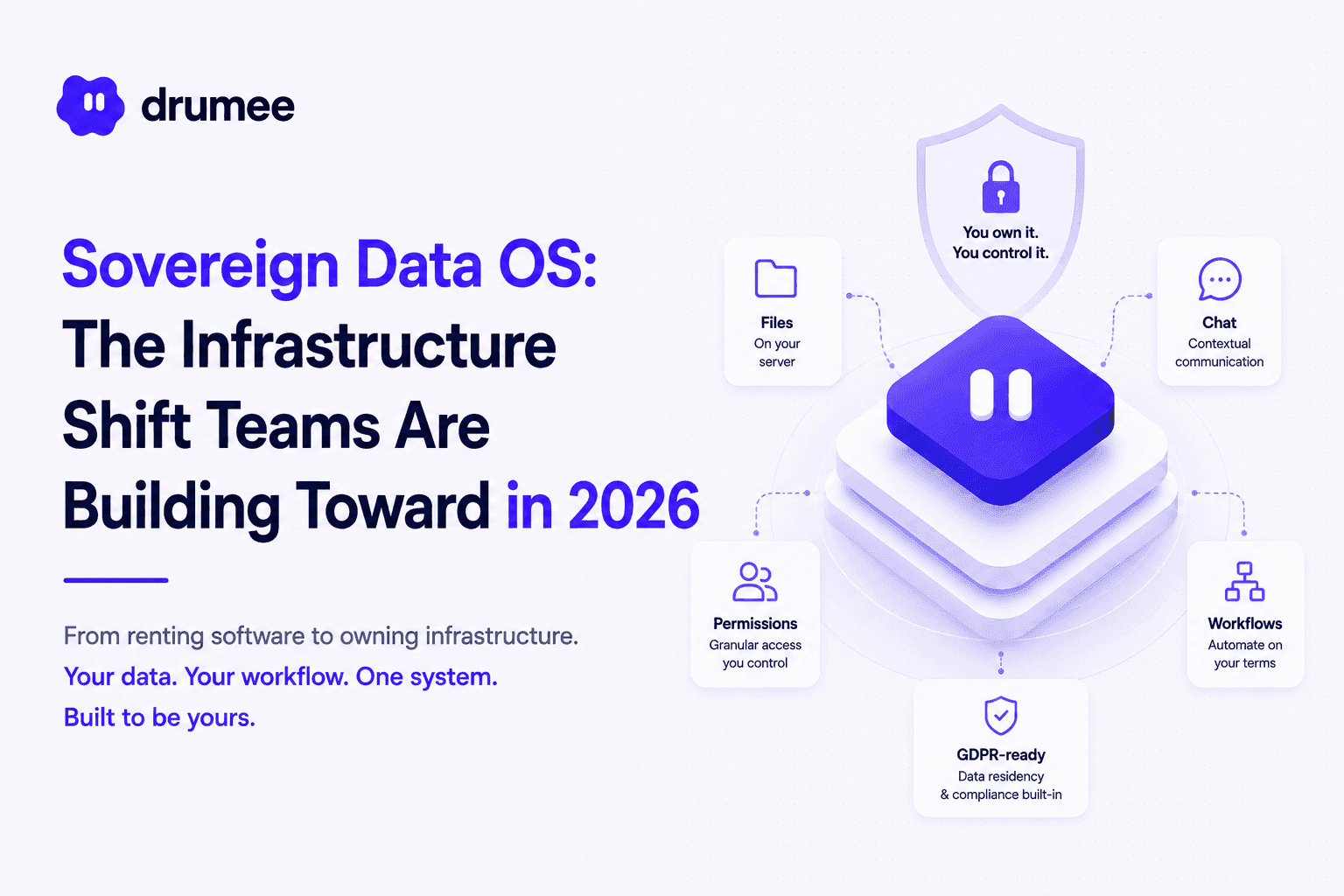
What Is a Sovereign Data OS? The Infrastructure Shift Teams Are Building Toward in 2026
What is a sovereign data OS? Learn how Drumee's unified self-hosted infrastructure replaces fragmented SaaS stacks with a single governable environment for files, chat, permissions, and workflows in 2026.
Data Ownership: What It Means and How to Achieve It in 2026
What is data ownership and how do you actually achieve it? Learn the three layers of data control, why AI changes the stakes, and how self-hosted infrastructure gives teams genuine ownership in 2026.